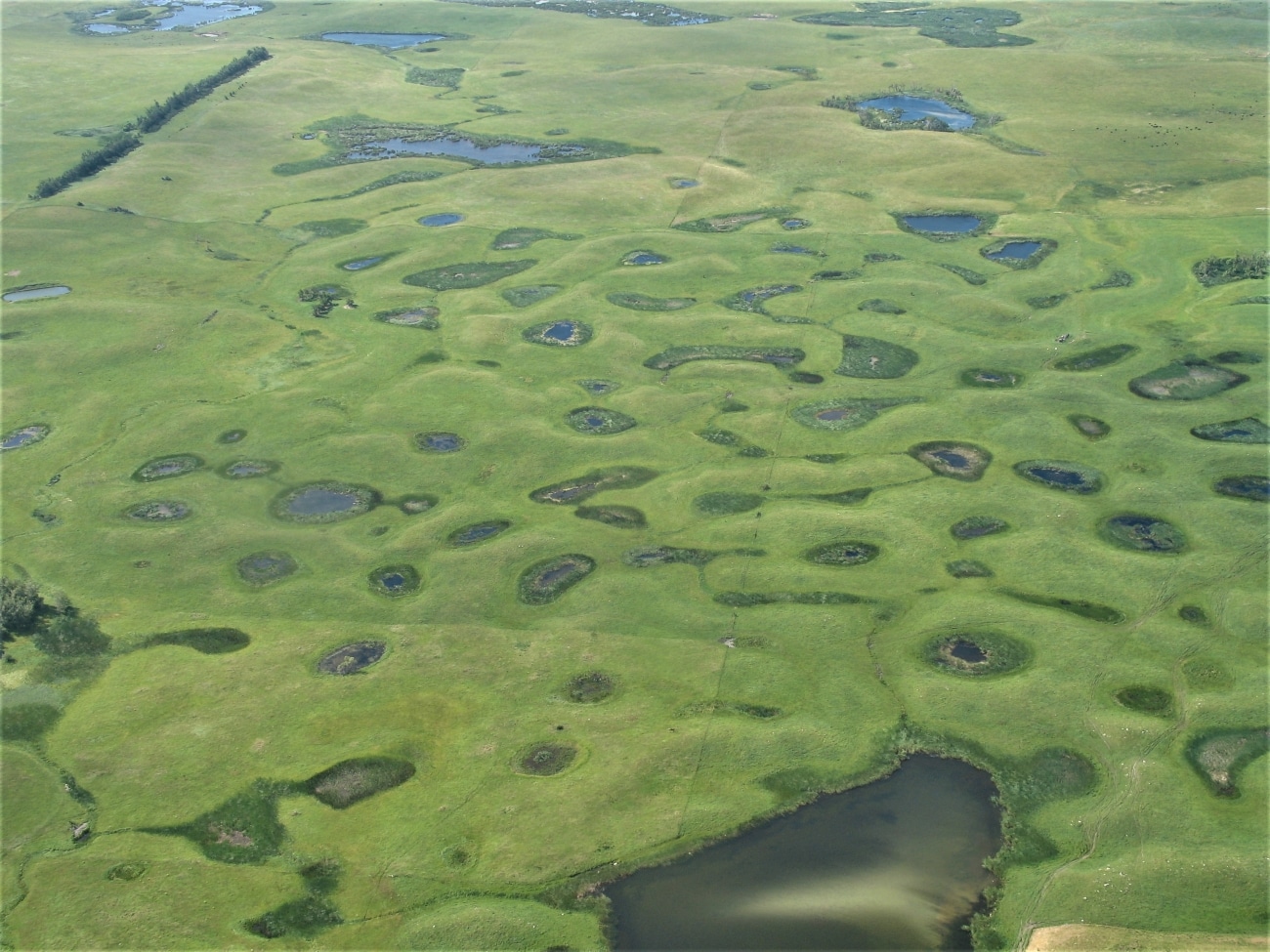
If you attended DUX in Memphis, you may have been asked to sign a petition to protect the Prairie Pothole Region. We were too. As duck hunters, we had heard of the potholes, but we did not fully understand how important this region is until we looked closer. The short version: changes to federal wetland protections could affect the habitat that drives duck production across much of North America.
Here is what hunters need to know: what the proposed federal change does, why the Prairie Pothole Region matters, how drainage tile affects wetland easements, and how to submit a public comment before the deadline.
So, what’s the issue?
The U.S. Fish and Wildlife Service is reviewing the 2024 rule that set drainage tile setbacks near wetland easements in the Prairie Pothole Region. The review has two parts: a request for public input on how the rule is working, and a proposal to repeal the current easement rule and replace it with a weaker standard.
Public comments on the 2024 rule should focus on whether the current drainage tile setback process is working and whether science-based setbacks should remain in place. These easements were paid for with duck stamp dollars, so hunters have a direct stake in how the rule is handled.
The concern is the second part: repealing the 2024 easement rule could weaken the wetland protections already in place. The current rule gives landowners a science-based way to install drainage tile without harming protected wetlands. Replacing it before it has had time to work could put smaller, shallower wetlands at greater risk.
Many waterfowl conservation organizations, including Ducks Unlimited, argue that the current rule is working and should be given time before it is repealed.
The concern is similar to the debate around the U.S. Roadless Rule, which protects more than 58 million acres of national forest from road construction and logging. In both cases, the risk is that once habitat protections are weakened and habitat is lost, it is hard to get it back.
What is a Prairie Pothole and where are they found?
A prairie pothole is a shallow wetland depression left behind by glaciers more than 10,000 years ago. These potholes can be only a few inches deep or several feet deep, but together they create one of the most productive duck-breeding landscapes in North America.
The Prairie Pothole Region covers more than 300,000 square miles across the Dakotas, Minnesota, Iowa, Montana, and parts of Canada. In some places, there can be as many as 100 wetlands in a single square mile. Together, these potholes serve as a major breeding ground for dabbling ducks such as mallards, pintails, blue-winged teal, and gadwalls, making the region one of the most important duck-production areas on the continent.
Why is this so important to the Duck Population?
When the snow melts, these wetlands come alive with aquatic insects. Larvae, fairy shrimp, and other invertebrates emerge during the long daylight hours, giving breeding ducks the protein-rich food they need to recover from migration and produce eggs.
But don’t the ducks really need the grasslands to nest?
Yes, ducks need grasslands to nest. But before they can produce eggs, they also need an abundant, high-protein food source after migration. The Prairie Pothole Region provides that food at a scale that is hard to find anywhere else on the continent.
What would happen if the Prairie Potholes disappeared tomorrow?
Biologists estimate that the Prairie Pothole Region supports a major share of the ducks we see across the continent. If those wetlands were lost or significantly reduced, the impact on North American duck numbers would be enormous.
But this proposal wouldn’t necessarily cause this region to dry up.
That does not mean the entire region would dry up overnight. The bigger risk is that drainage changes could lower water levels enough to affect many smaller, shallower potholes. Those water swings matter because annual duck counts and hunting regulations are closely tied to breeding conditions in this region. In wet years, duck numbers rise; in dry years, they fall.
For duck hunters, lower production could eventually mean changes to season frameworks. We do not know exactly how much seasons would change, but a significant drop in duck numbers could lead to lower bag limits, shorter seasons, or both.
But Not ALL ducks come from this region.
Not every duck comes from the Prairie Pothole Region. Ducks also breed in places such as the boreal forest, Alaska, the northeastern United States, and Canada. But those areas tend to be more stable from year to year, while the Prairie Pothole Region drives many of the peaks and valleys hunters see in annual duck numbers.
Back to the issue, what is a drainage tile easement, why do I care, and what is so great about this 2024 rule if it was just created?
The issue goes back to the Duck Stamp Act of 1934, which helped fund wetland conservation. Early efforts focused on buying refuge land. By the 1960s, conservation groups and agencies were also paying private landowners for permanent wetland easements. In simple terms, landowners received a one-time payment to keep protected wetlands intact. If those wetlands were drained or damaged, the easement could be enforced legally.
Where drainage tiles come into play is that the litigation states that the water cannot be drained by drainage ditches or any other means, directly or indirectly. When we think of drainage today, we think of plastic drainage pipe submerged below the ground that allows water to leach into the pipe to be drained elsewhere.
Why is the 2024 Rule so important? It was only just created a few years ago!
Broad rules can be hard to follow, especially because one wetland easement is not exactly like the next. Before the 2024 rule, landowners who wanted to install drainage tile often faced a long back-and-forth approval process. Beginning in 2020, the U.S. Fish and Wildlife Service worked on science-based hydrologic formulas to determine site-specific setbacks. The rule also gave landowners protection if they followed the formula and a wetland was still adversely affected.
This is a win-win!
That creates a better balance: science-based drainage tile setbacks can protect wetlands paid for with hunting dollars while giving landowners clearer guidance and protection if the formula does not perform as expected.
That is why organizations such as Ducks Unlimited are urging hunters and conservation-minded citizens to speak up. The 2024 rule appears to offer the best current balance between protecting wetlands purchased with duck stamp dollars and giving landowners clear, science-based guidance. It should be given a fair chance to work before being repealed.
So, what can you do?
1. Submit an official public comment to the U.S. Fish and Wildlife Service
A personalized comment carries more weight than a form letter. Explain who you are, why the Prairie Pothole Region matters to you, and why you support keeping strong drainage tile setbacks in place.
- Federal Register notice: https://www.federalregister.gov/documents/2026/07/24/2026-14995/national-wildlife-refuge-system-request-for-information-on-implementation-of-drain-tile-setbacks
- Direct comment portal (search docket FWS-HQ-NWRS-2026-2641 if needed): https://www.regulations.gov/document/FWS-HQ-NWRS-2026-2641-0001
Comments must be received by 11:59 p.m. Eastern on August 7, 2026.
2. Sign the Ducks Unlimited petition
Quick and straightforward: https://www.ducks.org/save-the-duck-factory
(Direct petition link: https://ducks.quorum.us/campaign/duckfactory/)
The Prairie Pothole Region may feel far away from many duck blinds, but its impact shows up in the birds we see, the seasons we get, and the hunting traditions we hope to pass on. If you care about ducks, now is the time to speak up.
